
The Best of Ethiopia
The Mammals of the Simien and Bale Mountains, and the
Stone Churches of Lalibela


Ethiopia, once known as Abyssinia, is an ancient land of great mysteries, legends, with a history that includes such famous names as King Solomon, the Queen of Sheba, Prester John and more recently ‘Lucy’. The Ark of the Covenant is supposedly hidden in the country. The ‘New Jerusalem’, originally known as Roha and then changed to Lalibela in 1220, lies in the northern part of the country. Known as the ‘Horn of Africa’, Ethiopia was the crossroads between African and Middle East cultures and peoples. The country is both rugged and beautiful, is the source of the Blue Nile and is home to more than 80 ethnic groups. During our first visit to Ethiopia, Joe and I were captivated by the people, the scenery and the endemic wildlife and are ready to go back and explore more of both the natural treasures that Ethiopia has to offer as well as more of its incredible history and culture. We hope you choose to join us after reading further.
SOME BACKGROUND ON THE TRIP: Last year, we traveled to Ethiopia after many years of prompting by our Kenyan outfitter, Steve Turner. We went to capture some of the endemic wildlife of the country: the Ethiopian wolf, the Walia ibex, the Gelada baboon, the Lammergeyer Vulture and the Mountain nyala. At the time we also decided to visit the Omo River Delta and to photograph several of the local tribes in that region. We loved every aspect of the trip from the wildlife shooting to the people photography. Travel was easier than we expected, with accommodations, even though they were basic at times, more than adequate and much better than anticipated. The wildlife photography was a little hard at times but the rewards were worth any small hardships that we might have experienced. Because this was our first trip to Ethiopia, we tried to ‘do it all’ and felt that we could have easily spent more time with the Geladas, for instance. Right then and there we knew that we would be back.
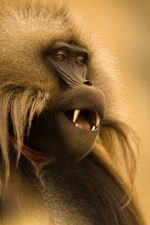 Joe's note: I felt that the Gelada experience rivaled or surpassed any primate photography I've ever done, including the mountain gorillas that we've visited 50 times! In our one full day in Gelada country we were sometimes surrounded by dozens, and sometimes hundreds of Geladas. These baboon-like primates are vegetarians and gentle, and by moving slowly and staying low several of us ended up shooting with wide-angle lenses almost beneath their hands as they picked at grasses.
The sense of intimacy and closeness was indeed special and unique. We had the option of photographing geladas with long telephoto lenses, for isolating portraits (like my BBC winner, shown here) or medium zooms or wide-angles to incorporate the breath-taking landscape of the rugged chain of ridges that fan our from our vantage point on the ridges
I can honestly say that photographing the Geladas was one of the most enjoyable experiences I've had with wild animals, and especially with primates. The landscape was spectacular, the terrain open and easy for framing, and the Geladas were tame and easy to shoot, all combining to make for one great photographic opportunity.
Even though we loved photographing the people in the Omo River Delta, it was extremely challenging at times. For the most part we couldn’t work as a group when photographing the people. It was much easier to work with your own person on a one-on-one basis but for some people, this was difficult to do. You had to be dynamic and interactive and the people at times weren’t exactly cooperative. But for the most part, we came away with some incredible images plus quite a few friends along the way. The camp that we stayed at closed for several months after our visit and is still only open intermittently. Due to this logistical issue, we have decided not to venture to this southern area on this trip. Instead we have decided to visit another cultural center, the Christian city of Lalibela, where the famous Stone Churches were built in the late 12th century and early 13th century and is still a religious center for the Ethiopian Orthodox Church.
The Photo Tour
The main emphasis of this trip is the endemic wildlife of Ethiopia. With this in mind, we will be visiting two different areas: the Bale Mountains located south of Addis Ababa and the Simien Mountains in the north central part of the country.


In the Bale Mountains and surrounding area we'll be seeking the endangered Simien or Ethiopian wolf, the Nyala, and the Montane Nightjar ... among other species.
We’ll base our trip to the Bale Mountains out of the town of Goda and from there, we will travel up into the National Park via a 20-passenger tour bus. With only five people, plus Joe and I, there is plenty of room for us to shoot out of the windows of the bus or from the open doorway as we search for the most endangered canine in the world, the Ethiopian, or Simien, wolf. There are roughly 400 of these animals left in the wild and last year, we spotted at least 15 individuals and photographed many of these successfully from the bus. During the course of that day we had nearly thirty encounters with wolves, and while some were far away and merely exciting to see, many were close to the road and some wolves crossed the road or trotted On one of our days in the area, we’ll travel north to a smaller, lowland extension, of the Bale Mountains National Park. Here we’ll take off on foot to photograph the Nyala as well as the Bohor’s Reedbuck and Menelik’s Bushbuck. Even though I said we’ll be on foot, the walk is not difficult and most people did it with no problem at all.
From the Bale Mountains, we’ll head north to the Simien Mountains flying over some incredible vistas en route. We’ll travel over valleys and gorges thousands of feet deep, over a patchwork of cultivated and wild lands. We will land in Gondar and from there drive north to the Simien National Park. Along the way we will pass terraced hills and beautiful scenery and we’ll be able to stop and capture some of these scenes. For four nights, we’ll be staying at the highest lodge in Africa, Simien Lodge, located at just around 11,000 feet.
 On our last trip to this area, we wished that we would have had another full day at least with the Gelada baboons. Well, this time we do. We will have three full days in order to capture the Geladas, as well as to search for the Walia ibex and to work with some of the other birds and mammals in the area. Every morning, the Gelada climb to the top of precipitous cliffs to groom and socialize before taking off to forage across the fields during the day. As sunset approaches, once again the Gelada make their way back toward the cliffs, hanging out once again in small groups, grooming each other and interacting before heading down for the night on sheer cliff faces. It is at these two times of the day that we will concentrate our photography of these beautiful primates.


The Walia ibex are high-altitude mammals and on at least one of the days, we will travel to a high altitude plateau (at an altitude of just around 14,000 feet) in search of these beautiful creatures. Not only were we lucky enough to photograph them on the plateau but we also had them right along the road on the pass heading up to the plateau. And I would be remiss if I didn’t mention the majestic scenery that we will have our entire time in the Simiens. You will love this area just as much as we do!
 Our final destination of the trip is Lalibela, the New Jerusalem of the Ethiopian Orthodox Christian world. Next to Aksum it is Ethiopia’s second most holy city. Our main reason for heading to this area is to visit the famous rock churches. The churches of Lalibela were built over a 24-year period when King Lalibela returned to Ethiopia after a pilgrimage to Jerusalem, the Holy City. Born in the second half of the 12th century as a prince into the ruling Zagwe Dynasty, legend has it that one day his mother observed his cradle covered by a swarm of bees. Seeing this as a sign of his future greatness, she exclaimed, “Lalibela” which in Agew means “the bees recognize his sovereignty.” Not only was he known by this name afterwards, but he is also the legendary Prester John.
If you would like to read more from our 2009 trip, I have listed the links below to both our Trip Report and Joe’s Field Journal entries. Both of these postings will give you some more details on what we experienced in 2009 and also give you some idea on what we might encounter on this trip.
Check out our 2009 Trip Report:
https://www.hoothollow.com/Trip%20Report%20-%20Ethiopia%202009.html
Joe’s Field Journal:
https://www.hoothollow.com/Trip%20Report%20-%20Ethiopia%20Field%20Journal%202009.html
If you are interested, please contact our office and inquire on availability of openings. We hope you choose to join us.
Contact information:
Kay Eisenhart, Office manager
McDonald Wildlife Photography, Inc.
73 Loht Road
McClure, PA 17841-8900
USA
PH: (717) 543-6423/FAX: 717-543-5342
E-mail: info@hoothollow.com
https://www.hoothollow.com
The Best of Ethiopia
The Mammals of the Simien and Bale Mountains, and the
Stone Churches of Lalibela
Ethiopia, once known as Abyssinia, is an ancient land of great mysteries, legends, with a history that includes such famous names as King Solomon, the Queen of Sheba, Prester John and more recently ‘Lucy’. The Ark of the Covenant is supposedly hidden in the country. The ‘New Jerusalem’, originally known as Roha and then changed to Lalibela in 1220, lies in the northern part of the country. Known as the ‘Horn of Africa’, Ethiopia was the crossroads between African and Middle East cultures and peoples. The country is both rugged and beautiful, is the source of the Blue Nile and is home to more than 80 ethnic groups. During our first visit to Ethiopia, Joe and I were captivated by the people, the scenery and the endemic wildlife and are ready to go back and explore more of both the natural treasures that Ethiopia has to offer as well as more of its incredible history and culture. We hope you choose to join us after reading further.
SOME BACKGROUND ON THE TRIP: Last year, we traveled to Ethiopia after many years of prompting by our Kenyan outfitter, Steve Turner. We went to capture some of the endemic wildlife of the country: the Ethiopian wolf, the Walia ibex, the Gelada baboon, the Lammergeyer Vulture and the Mountain nyala. At the time we also decided to visit the Omo River Delta and to photograph several of the local tribes in that region. We loved every aspect of the trip from the wildlife shooting to the people photography. Travel was easier than we expected, with accommodations, even though they were basic at times, more than adequate and much better than anticipated. The wildlife photography was a little hard at times but the rewards were worth any small hardships that we might have experienced. Because this was our first trip to Ethiopia, we tried to ‘do it all’ and felt that we could have easily spent more time with the Geladas, for instance. Right then and there we knew that we would be back.
Joe's note: I felt that the Gelada experience rivaled or surpassed any primate photography I've ever done, including the mountain gorillas that we've visited 50 times! In our one full day in Gelada country we were sometimes surrounded by dozens, and sometimes hundreds of Geladas. These baboon-like primates are vegetarians and gentle, and by moving slowly and staying low several of us ended up shooting with wide-angle lenses almost beneath their hands as they picked at grasses.
The sense of intimacy and closeness was indeed special and unique. We had the option of photographing geladas with long telephoto lenses, for isolating portraits (like my BBC winner, shown here) or medium zooms or wide-angles to incorporate the breath-taking landscape of the rugged chain of ridges that fan our from our vantage point on the ridges
I can honestly say that photographing the Geladas was one of the most enjoyable experiences I've had with wild animals, and especially with primates. The landscape was spectacular, the terrain open and easy for framing, and the Geladas were tame and easy to shoot, all combining to make for one great photographic opportunity.
Even though we loved photographing the people in the Omo River Delta, it was extremely challenging at times. For the most part we couldn’t work as a group when photographing the people. It was much easier to work with your own person on a one-on-one basis but for some people, this was difficult to do. You had to be dynamic and interactive and the people at times weren’t exactly cooperative. But for the most part, we came away with some incredible images plus quite a few friends along the way. The camp that we stayed at closed for several months after our visit and is still only open intermittently. Due to this logistical issue, we have decided not to venture to this southern area on this trip. Instead we have decided to visit another cultural center, the Christian city of Lalibela, where the famous Stone Churches were built in the late 12th century and early 13th century and is still a religious center for the Ethiopian Orthodox Church.
The Photo Tour
The main emphasis of this trip is the endemic wildlife of Ethiopia. With this in mind, we will be visiting two different areas: the Bale Mountains located south of Addis Ababa and the Simien Mountains in the north central part of the country.
In the Bale Mountains and surrounding area we'll be seeking the endangered Simien or Ethiopian wolf, the Nyala, and the Montane Nightjar ... among other species.
We’ll base our trip to the Bale Mountains out of the town of Goda and from there, we will travel up into the National Park via a 20-passenger tour bus. With only five people, plus Joe and I, there is plenty of room for us to shoot out of the windows of the bus or from the open doorway as we search for the most endangered canine in the world, the Ethiopian, or Simien, wolf. There are roughly 400 of these animals left in the wild and last year, we spotted at least 15 individuals and photographed many of these successfully from the bus. During the course of that day we had nearly thirty encounters with wolves, and while some were far away and merely exciting to see, many were close to the road and some wolves crossed the road or trotted On one of our days in the area, we’ll travel north to a smaller, lowland extension, of the Bale Mountains National Park. Here we’ll take off on foot to photograph the Nyala as well as the Bohor’s Reedbuck and Menelik’s Bushbuck. Even though I said we’ll be on foot, the walk is not difficult and most people did it with no problem at all.
From the Bale Mountains, we’ll head north to the Simien Mountains flying over some incredible vistas en route. We’ll travel over valleys and gorges thousands of feet deep, over a patchwork of cultivated and wild lands. We will land in Gondar and from there drive north to the Simien National Park. Along the way we will pass terraced hills and beautiful scenery and we’ll be able to stop and capture some of these scenes. For four nights, we’ll be staying at the highest lodge in Africa, Simien Lodge, located at just around 11,000 feet.
On our last trip to this area, we wished that we would have had another full day at least with the Gelada baboons. Well, this time we do. We will have three full days in order to capture the Geladas, as well as to search for the Walia ibex and to work with some of the other birds and mammals in the area. Every morning, the Gelada climb to the top of precipitous cliffs to groom and socialize before taking off to forage across the fields during the day. As sunset approaches, once again the Gelada make their way back toward the cliffs, hanging out once again in small groups, grooming each other and interacting before heading down for the night on sheer cliff faces. It is at these two times of the day that we will concentrate our photography of these beautiful primates.
The Walia ibex are high-altitude mammals and on at least one of the days, we will travel to a high altitude plateau (at an altitude of just around 14,000 feet) in search of these beautiful creatures. Not only were we lucky enough to photograph them on the plateau but we also had them right along the road on the pass heading up to the plateau. And I would be remiss if I didn’t mention the majestic scenery that we will have our entire time in the Simiens. You will love this area just as much as we do!
Our final destination of the trip is Lalibela, the New Jerusalem of the Ethiopian Orthodox Christian world. Next to Aksum it is Ethiopia’s second most holy city. Our main reason for heading to this area is to visit the famous rock churches. The churches of Lalibela were built over a 24-year period when King Lalibela returned to Ethiopia after a pilgrimage to Jerusalem, the Holy City. Born in the second half of the 12th century as a prince into the ruling Zagwe Dynasty, legend has it that one day his mother observed his cradle covered by a swarm of bees. Seeing this as a sign of his future greatness, she exclaimed, “Lalibela” which in Agew means “the bees recognize his sovereignty.” Not only was he known by this name afterwards, but he is also the legendary Prester John.
If you would like to read more from our 2009 trip, I have listed the links below to both our Trip Report and Joe’s Field Journal entries. Both of these postings will give you some more details on what we experienced in 2009 and also give you some idea on what we might encounter on this trip.
Check out our 2009 Trip Report:
https://www.hoothollow.com/Trip%20Report%20-%20Ethiopia%202009.html
Joe’s Field Journal:
https://www.hoothollow.com/Trip%20Report%20-%20Ethiopia%20Field%20Journal%202009.html
If you are interested, please contact our office and inquire on availability of openings. We hope you choose to join us.
Contact information:
Kay Eisenhart, Office manager
McDonald Wildlife Photography, Inc.
73 Loht Road
McClure, PA 17841-8900
USA
PH: (717) 543-6423/FAX: 717-543-5342
E-mail: info@hoothollow.com
https://www.hoothollow.com
The Best of Ethiopia
The Mammals of the Simien and Bale Mountains, and the
Stone Churches of Lalibela
Ethiopia, once known as Abyssinia, is an ancient land of great mysteries, legends, with a history that includes such famous names as King Solomon, the Queen of Sheba, Prester John and more recently ‘Lucy’. The Ark of the Covenant is supposedly hidden in the country. The ‘New Jerusalem’, originally known as Roha and then changed to Lalibela in 1220, lies in the northern part of the country. Known as the ‘Horn of Africa’, Ethiopia was the crossroads between African and Middle East cultures and peoples. The country is both rugged and beautiful, is the source of the Blue Nile and is home to more than 80 ethnic groups. During our first visit to Ethiopia, Joe and I were captivated by the people, the scenery and the endemic wildlife and are ready to go back and explore more of both the natural treasures that Ethiopia has to offer as well as more of its incredible history and culture. We hope you choose to join us after reading further.
SOME BACKGROUND ON THE TRIP: Last year, we traveled to Ethiopia after many years of prompting by our Kenyan outfitter, Steve Turner. We went to capture some of the endemic wildlife of the country: the Ethiopian wolf, the Walia ibex, the Gelada baboon, the Lammergeyer Vulture and the Mountain nyala. At the time we also decided to visit the Omo River Delta and to photograph several of the local tribes in that region. We loved every aspect of the trip from the wildlife shooting to the people photography. Travel was easier than we expected, with accommodations, even though they were basic at times, more than adequate and much better than anticipated. The wildlife photography was a little hard at times but the rewards were worth any small hardships that we might have experienced. Because this was our first trip to Ethiopia, we tried to ‘do it all’ and felt that we could have easily spent more time with the Geladas, for instance. Right then and there we knew that we would be back.
Joe's note: I felt that the Gelada experience rivaled or surpassed any primate photography I've ever done, including the mountain gorillas that we've visited 50 times! In our one full day in Gelada country we were sometimes surrounded by dozens, and sometimes hundreds of Geladas. These baboon-like primates are vegetarians and gentle, and by moving slowly and staying low several of us ended up shooting with wide-angle lenses almost beneath their hands as they picked at grasses.
The sense of intimacy and closeness was indeed special and unique. We had the option of photographing geladas with long telephoto lenses, for isolating portraits (like my BBC winner, shown here) or medium zooms or wide-angles to incorporate the breath-taking landscape of the rugged chain of ridges that fan our from our vantage point on the ridges
I can honestly say that photographing the Geladas was one of the most enjoyable experiences I've had with wild animals, and especially with primates. The landscape was spectacular, the terrain open and easy for framing, and the Geladas were tame and easy to shoot, all combining to make for one great photographic opportunity.
Even though we loved photographing the people in the Omo River Delta, it was extremely challenging at times. For the most part we couldn’t work as a group when photographing the people. It was much easier to work with your own person on a one-on-one basis but for some people, this was difficult to do. You had to be dynamic and interactive and the people at times weren’t exactly cooperative. But for the most part, we came away with some incredible images plus quite a few friends along the way. The camp that we stayed at closed for several months after our visit and is still only open intermittently. Due to this logistical issue, we have decided not to venture to this southern area on this trip. Instead we have decided to visit another cultural center, the Christian city of Lalibela, where the famous Stone Churches were built in the late 12th century and early 13th century and is still a religious center for the Ethiopian Orthodox Church.
The Photo Tour
The main emphasis of this trip is the endemic wildlife of Ethiopia. With this in mind, we will be visiting two different areas: the Bale Mountains located south of Addis Ababa and the Simien Mountains in the north central part of the country.
In the Bale Mountains and surrounding area we'll be seeking the endangered Simien or Ethiopian wolf, the Nyala, and the Montane Nightjar ... among other species.
We’ll base our trip to the Bale Mountains out of the town of Goda and from there, we will travel up into the National Park via a 20-passenger tour bus. With only five people, plus Joe and I, there is plenty of room for us to shoot out of the windows of the bus or from the open doorway as we search for the most endangered canine in the world, the Ethiopian, or Simien, wolf. There are roughly 400 of these animals left in the wild and last year, we spotted at least 15 individuals and photographed many of these successfully from the bus. During the course of that day we had nearly thirty encounters with wolves, and while some were far away and merely exciting to see, many were close to the road and some wolves crossed the road or trotted On one of our days in the area, we’ll travel north to a smaller, lowland extension, of the Bale Mountains National Park. Here we’ll take off on foot to photograph the Nyala as well as the Bohor’s Reedbuck and Menelik’s Bushbuck. Even though I said we’ll be on foot, the walk is not difficult and most people did it with no problem at all.
From the Bale Mountains, we’ll head north to the Simien Mountains flying over some incredible vistas en route. We’ll travel over valleys and gorges thousands of feet deep, over a patchwork of cultivated and wild lands. We will land in Gondar and from there drive north to the Simien National Park. Along the way we will pass terraced hills and beautiful scenery and we’ll be able to stop and capture some of these scenes. For four nights, we’ll be staying at the highest lodge in Africa, Simien Lodge, located at just around 11,000 feet.
On our last trip to this area, we wished that we would have had another full day at least with the Gelada baboons. Well, this time we do. We will have three full days in order to capture the Geladas, as well as to search for the Walia ibex and to work with some of the other birds and mammals in the area. Every morning, the Gelada climb to the top of precipitous cliffs to groom and socialize before taking off to forage across the fields during the day. As sunset approaches, once again the Gelada make their way back toward the cliffs, hanging out once again in small groups, grooming each other and interacting before heading down for the night on sheer cliff faces. It is at these two times of the day that we will concentrate our photography of these beautiful primates.
The Walia ibex are high-altitude mammals and on at least one of the days, we will travel to a high altitude plateau (at an altitude of just around 14,000 feet) in search of these beautiful creatures. Not only were we lucky enough to photograph them on the plateau but we also had them right along the road on the pass heading up to the plateau. And I would be remiss if I didn’t mention the majestic scenery that we will have our entire time in the Simiens. You will love this area just as much as we do!
Our final destination of the trip is Lalibela, the New Jerusalem of the Ethiopian Orthodox Christian world. Next to Aksum it is Ethiopia’s second most holy city. Our main reason for heading to this area is to visit the famous rock churches. The churches of Lalibela were built over a 24-year period when King Lalibela returned to Ethiopia after a pilgrimage to Jerusalem, the Holy City. Born in the second half of the 12th century as a prince into the ruling Zagwe Dynasty, legend has it that one day his mother observed his cradle covered by a swarm of bees. Seeing this as a sign of his future greatness, she exclaimed, “Lalibela” which in Agew means “the bees recognize his sovereignty.” Not only was he known by this name afterwards, but he is also the legendary Prester John.
If you would like to read more from our 2009 trip, I have listed the links below to both our Trip Report and Joe’s Field Journal entries. Both of these postings will give you some more details on what we experienced in 2009 and also give you some idea on what we might encounter on this trip.
Check out our 2009 Trip Report:
https://www.hoothollow.com/Trip%20Report%20-%20Ethiopia%202009.html
Joe’s Field Journal:
https://www.hoothollow.com/Trip%20Report%20-%20Ethiopia%20Field%20Journal%202009.html
If you are interested, please contact our office and inquire on availability of openings. We hope you choose to join us.
Contact information:
Kay Eisenhart, Office manager
McDonald Wildlife Photography, Inc.
73 Loht Road
McClure, PA 17841-8900
USA
PH: (717) 543-6423/FAX: 717-543-5342
E-mail: info@hoothollow.com
https://www.hoothollow.com
The Best of Ethiopia
The Mammals of the Simien and Bale Mountains, and the
Stone Churches of Lalibela
Ethiopia, once known as Abyssinia, is an ancient land of great mysteries, legends, with a history that includes such famous names as King Solomon, the Queen of Sheba, Prester John and more recently ‘Lucy’. The Ark of the Covenant is supposedly hidden in the country. The ‘New Jerusalem’, originally known as Roha and then changed to Lalibela in 1220, lies in the northern part of the country. Known as the ‘Horn of Africa’, Ethiopia was the crossroads between African and Middle East cultures and peoples. The country is both rugged and beautiful, is the source of the Blue Nile and is home to more than 80 ethnic groups. During our first visit to Ethiopia, Joe and I were captivated by the people, the scenery and the endemic wildlife and are ready to go back and explore more of both the natural treasures that Ethiopia has to offer as well as more of its incredible history and culture. We hope you choose to join us after reading further.
SOME BACKGROUND ON THE TRIP: Last year, we traveled to Ethiopia after many years of prompting by our Kenyan outfitter, Steve Turner. We went to capture some of the endemic wildlife of the country: the Ethiopian wolf, the Walia ibex, the Gelada baboon, the Lammergeyer Vulture and the Mountain nyala. At the time we also decided to visit the Omo River Delta and to photograph several of the local tribes in that region. We loved every aspect of the trip from the wildlife shooting to the people photography. Travel was easier than we expected, with accommodations, even though they were basic at times, more than adequate and much better than anticipated. The wildlife photography was a little hard at times but the rewards were worth any small hardships that we might have experienced. Because this was our first trip to Ethiopia, we tried to ‘do it all’ and felt that we could have easily spent more time with the Geladas, for instance. Right then and there we knew that we would be back.
Joe's note: I felt that the Gelada experience rivaled or surpassed any primate photography I've ever done, including the mountain gorillas that we've visited 50 times! In our one full day in Gelada country we were sometimes surrounded by dozens, and sometimes hundreds of Geladas. These baboon-like primates are vegetarians and gentle, and by moving slowly and staying low several of us ended up shooting with wide-angle lenses almost beneath their hands as they picked at grasses.
The sense of intimacy and closeness was indeed special and unique. We had the option of photographing geladas with long telephoto lenses, for isolating portraits (like my BBC winner, shown here) or medium zooms or wide-angles to incorporate the breath-taking landscape of the rugged chain of ridges that fan our from our vantage point on the ridges
I can honestly say that photographing the Geladas was one of the most enjoyable experiences I've had with wild animals, and especially with primates. The landscape was spectacular, the terrain open and easy for framing, and the Geladas were tame and easy to shoot, all combining to make for one great photographic opportunity.
Even though we loved photographing the people in the Omo River Delta, it was extremely challenging at times. For the most part we couldn’t work as a group when photographing the people. It was much easier to work with your own person on a one-on-one basis but for some people, this was difficult to do. You had to be dynamic and interactive and the people at times weren’t exactly cooperative. But for the most part, we came away with some incredible images plus quite a few friends along the way. The camp that we stayed at closed for several months after our visit and is still only open intermittently. Due to this logistical issue, we have decided not to venture to this southern area on this trip. Instead we have decided to visit another cultural center, the Christian city of Lalibela, where the famous Stone Churches were built in the late 12th century and early 13th century and is still a religious center for the Ethiopian Orthodox Church.
The Photo Tour
The main emphasis of this trip is the endemic wildlife of Ethiopia. With this in mind, we will be visiting two different areas: the Bale Mountains located south of Addis Ababa and the Simien Mountains in the north central part of the country.
In the Bale Mountains and surrounding area we'll be seeking the endangered Simien or Ethiopian wolf, the Nyala, and the Montane Nightjar ... among other species.
We’ll base our trip to the Bale Mountains out of the town of Goda and from there, we will travel up into the National Park via a 20-passenger tour bus. With only five people, plus Joe and I, there is plenty of room for us to shoot out of the windows of the bus or from the open doorway as we search for the most endangered canine in the world, the Ethiopian, or Simien, wolf. There are roughly 400 of these animals left in the wild and last year, we spotted at least 15 individuals and photographed many of these successfully from the bus. During the course of that day we had nearly thirty encounters with wolves, and while some were far away and merely exciting to see, many were close to the road and some wolves crossed the road or trotted On one of our days in the area, we’ll travel north to a smaller, lowland extension, of the Bale Mountains National Park. Here we’ll take off on foot to photograph the Nyala as well as the Bohor’s Reedbuck and Menelik’s Bushbuck. Even though I said we’ll be on foot, the walk is not difficult and most people did it with no problem at all.
From the Bale Mountains, we’ll head north to the Simien Mountains flying over some incredible vistas en route. We’ll travel over valleys and gorges thousands of feet deep, over a patchwork of cultivated and wild lands. We will land in Gondar and from there drive north to the Simien National Park. Along the way we will pass terraced hills and beautiful scenery and we’ll be able to stop and capture some of these scenes. For four nights, we’ll be staying at the highest lodge in Africa, Simien Lodge, located at just around 11,000 feet.
On our last trip to this area, we wished that we would have had another full day at least with the Gelada baboons. Well, this time we do. We will have three full days in order to capture the Geladas, as well as to search for the Walia ibex and to work with some of the other birds and mammals in the area. Every morning, the Gelada climb to the top of precipitous cliffs to groom and socialize before taking off to forage across the fields during the day. As sunset approaches, once again the Gelada make their way back toward the cliffs, hanging out once again in small groups, grooming each other and interacting before heading down for the night on sheer cliff faces. It is at these two times of the day that we will concentrate our photography of these beautiful primates.
The Walia ibex are high-altitude mammals and on at least one of the days, we will travel to a high altitude plateau (at an altitude of just around 14,000 feet) in search of these beautiful creatures. Not only were we lucky enough to photograph them on the plateau but we also had them right along the road on the pass heading up to the plateau. And I would be remiss if I didn’t mention the majestic scenery that we will have our entire time in the Simiens. You will love this area just as much as we do!
Our final destination of the trip is Lalibela, the New Jerusalem of the Ethiopian Orthodox Christian world. Next to Aksum it is Ethiopia’s second most holy city. Our main reason for heading to this area is to visit the famous rock churches. The churches of Lalibela were built over a 24-year period when King Lalibela returned to Ethiopia after a pilgrimage to Jerusalem, the Holy City. Born in the second half of the 12th century as a prince into the ruling Zagwe Dynasty, legend has it that one day his mother observed his cradle covered by a swarm of bees. Seeing this as a sign of his future greatness, she exclaimed, “Lalibela” which in Agew means “the bees recognize his sovereignty.” Not only was he known by this name afterwards, but he is also the legendary Prester John.
If you would like to read more from our 2009 trip, I have listed the links below to both our Trip Report and Joe’s Field Journal entries. Both of these postings will give you some more details on what we experienced in 2009 and also give you some idea on what we might encounter on this trip.
Check out our 2009 Trip Report:
https://www.hoothollow.com/Trip%20Report%20-%20Ethiopia%202009.html
Joe’s Field Journal:
https://www.hoothollow.com/Trip%20Report%20-%20Ethiopia%20Field%20Journal%202009.html
If you are interested, please contact our office and inquire on availability of openings. We hope you choose to join us.
Contact information:
Kay Eisenhart, Office manager
McDonald Wildlife Photography, Inc.
73 Loht Road
McClure, PA 17841-8900
USA
PH: (717) 543-6423/FAX: 717-543-5342
E-mail: info@hoothollow.com
https://www.hoothollow.com
The Best of Ethiopia
The Mammals of the Simien and Bale Mountains, and the
Stone Churches of Lalibela
Ethiopia, once known as Abyssinia, is an ancient land of great mysteries, legends, with a history that includes such famous names as King Solomon, the Queen of Sheba, Prester John and more recently ‘Lucy’. The Ark of the Covenant is supposedly hidden in the country. The ‘New Jerusalem’, originally known as Roha and then changed to Lalibela in 1220, lies in the northern part of the country. Known as the ‘Horn of Africa’, Ethiopia was the crossroads between African and Middle East cultures and peoples. The country is both rugged and beautiful, is the source of the Blue Nile and is home to more than 80 ethnic groups. During our first visit to Ethiopia, Joe and I were captivated by the people, the scenery and the endemic wildlife and are ready to go back and explore more of both the natural treasures that Ethiopia has to offer as well as more of its incredible history and culture. We hope you choose to join us after reading further.
SOME BACKGROUND ON THE TRIP: Last year, we traveled to Ethiopia after many years of prompting by our Kenyan outfitter, Steve Turner. We went to capture some of the endemic wildlife of the country: the Ethiopian wolf, the Walia ibex, the Gelada baboon, the Lammergeyer Vulture and the Mountain nyala. At the time we also decided to visit the Omo River Delta and to photograph several of the local tribes in that region. We loved every aspect of the trip from the wildlife shooting to the people photography. Travel was easier than we expected, with accommodations, even though they were basic at times, more than adequate and much better than anticipated. The wildlife photography was a little hard at times but the rewards were worth any small hardships that we might have experienced. Because this was our first trip to Ethiopia, we tried to ‘do it all’ and felt that we could have easily spent more time with the Geladas, for instance. Right then and there we knew that we would be back.
Joe's note: I felt that the Gelada experience rivaled or surpassed any primate photography I've ever done, including the mountain gorillas that we've visited 50 times! In our one full day in Gelada country we were sometimes surrounded by dozens, and sometimes hundreds of Geladas. These baboon-like primates are vegetarians and gentle, and by moving slowly and staying low several of us ended up shooting with wide-angle lenses almost beneath their hands as they picked at grasses.
The sense of intimacy and closeness was indeed special and unique. We had the option of photographing geladas with long telephoto lenses, for isolating portraits (like my BBC winner, shown here) or medium zooms or wide-angles to incorporate the breath-taking landscape of the rugged chain of ridges that fan our from our vantage point on the ridges
I can honestly say that photographing the Geladas was one of the most enjoyable experiences I've had with wild animals, and especially with primates. The landscape was spectacular, the terrain open and easy for framing, and the Geladas were tame and easy to shoot, all combining to make for one great photographic opportunity.
Even though we loved photographing the people in the Omo River Delta, it was extremely challenging at times. For the most part we couldn’t work as a group when photographing the people. It was much easier to work with your own person on a one-on-one basis but for some people, this was difficult to do. You had to be dynamic and interactive and the people at times weren’t exactly cooperative. But for the most part, we came away with some incredible images plus quite a few friends along the way. The camp that we stayed at closed for several months after our visit and is still only open intermittently. Due to this logistical issue, we have decided not to venture to this southern area on this trip. Instead we have decided to visit another cultural center, the Christian city of Lalibela, where the famous Stone Churches were built in the late 12th century and early 13th century and is still a religious center for the Ethiopian Orthodox Church.
The Photo Tour
The main emphasis of this trip is the endemic wildlife of Ethiopia. With this in mind, we will be visiting two different areas: the Bale Mountains located south of Addis Ababa and the Simien Mountains in the north central part of the country.
In the Bale Mountains and surrounding area we'll be seeking the endangered Simien or Ethiopian wolf, the Nyala, and the Montane Nightjar ... among other species.
We’ll base our trip to the Bale Mountains out of the town of Goda and from there, we will travel up into the National Park via a 20-passenger tour bus. With only five people, plus Joe and I, there is plenty of room for us to shoot out of the windows of the bus or from the open doorway as we search for the most endangered canine in the world, the Ethiopian, or Simien, wolf. There are roughly 400 of these animals left in the wild and last year, we spotted at least 15 individuals and photographed many of these successfully from the bus. During the course of that day we had nearly thirty encounters with wolves, and while some were far away and merely exciting to see, many were close to the road and some wolves crossed the road or trotted On one of our days in the area, we’ll travel north to a smaller, lowland extension, of the Bale Mountains National Park. Here we’ll take off on foot to photograph the Nyala as well as the Bohor’s Reedbuck and Menelik’s Bushbuck. Even though I said we’ll be on foot, the walk is not difficult and most people did it with no problem at all.
From the Bale Mountains, we’ll head north to the Simien Mountains flying over some incredible vistas en route. We’ll travel over valleys and gorges thousands of feet deep, over a patchwork of cultivated and wild lands. We will land in Gondar and from there drive north to the Simien National Park. Along the way we will pass terraced hills and beautiful scenery and we’ll be able to stop and capture some of these scenes. For four nights, we’ll be staying at the highest lodge in Africa, Simien Lodge, located at just around 11,000 feet.
On our last trip to this area, we wished that we would have had another full day at least with the Gelada baboons. Well, this time we do. We will have three full days in order to capture the Geladas, as well as to search for the Walia ibex and to work with some of the other birds and mammals in the area. Every morning, the Gelada climb to the top of precipitous cliffs to groom and socialize before taking off to forage across the fields during the day. As sunset approaches, once again the Gelada make their way back toward the cliffs, hanging out once again in small groups, grooming each other and interacting before heading down for the night on sheer cliff faces. It is at these two times of the day that we will concentrate our photography of these beautiful primates.
The Walia ibex are high-altitude mammals and on at least one of the days, we will travel to a high altitude plateau (at an altitude of just around 14,000 feet) in search of these beautiful creatures. Not only were we lucky enough to photograph them on the plateau but we also had them right along the road on the pass heading up to the plateau. And I would be remiss if I didn’t mention the majestic scenery that we will have our entire time in the Simiens. You will love this area just as much as we do!
Our final destination of the trip is Lalibela, the New Jerusalem of the Ethiopian Orthodox Christian world. Next to Aksum it is Ethiopia’s second most holy city. Our main reason for heading to this area is to visit the famous rock churches. The churches of Lalibela were built over a 24-year period when King Lalibela returned to Ethiopia after a pilgrimage to Jerusalem, the Holy City. Born in the second half of the 12th century as a prince into the ruling Zagwe Dynasty, legend has it that one day his mother observed his cradle covered by a swarm of bees. Seeing this as a sign of his future greatness, she exclaimed, “Lalibela” which in Agew means “the bees recognize his sovereignty.” Not only was he known by this name afterwards, but he is also the legendary Prester John.
If you would like to read more from our 2009 trip, I have listed the links below to both our Trip Report and Joe’s Field Journal entries. Both of these postings will give you some more details on what we experienced in 2009 and also give you some idea on what we might encounter on this trip.
Check out our 2009 Trip Report:
https://www.hoothollow.com/Trip%20Report%20-%20Ethiopia%202009.html
Joe’s Field Journal:
https://www.hoothollow.com/Trip%20Report%20-%20Ethiopia%20Field%20Journal%202009.html
If you are interested, please contact our office and inquire on availability of openings. We hope you choose to join us.
Contact information:
Kay Eisenhart, Office manager
McDonald Wildlife Photography, Inc.
73 Loht Road
McClure, PA 17841-8900
USA
PH: (717) 543-6423/FAX: 717-543-5342
E-mail: info@hoothollow.com
https://www.hoothollow.com
The Best of Ethiopia
The Mammals of the Simien and Bale Mountains, and the
Stone Churches of Lalibela
Ethiopia, once known as Abyssinia, is an ancient land of great mysteries, legends, with a history that includes such famous names as King Solomon, the Queen of Sheba, Prester John and more recently ‘Lucy’. The Ark of the Covenant is supposedly hidden in the country. The ‘New Jerusalem’, originally known as Roha and then changed to Lalibela in 1220, lies in the northern part of the country. Known as the ‘Horn of Africa’, Ethiopia was the crossroads between African and Middle East cultures and peoples. The country is both rugged and beautiful, is the source of the Blue Nile and is home to more than 80 ethnic groups. During our first visit to Ethiopia, Joe and I were captivated by the people, the scenery and the endemic wildlife and are ready to go back and explore more of both the natural treasures that Ethiopia has to offer as well as more of its incredible history and culture. We hope you choose to join us after reading further.
SOME BACKGROUND ON THE TRIP: Last year, we traveled to Ethiopia after many years of prompting by our Kenyan outfitter, Steve Turner. We went to capture some of the endemic wildlife of the country: the Ethiopian wolf, the Walia ibex, the Gelada baboon, the Lammergeyer Vulture and the Mountain nyala. At the time we also decided to visit the Omo River Delta and to photograph several of the local tribes in that region. We loved every aspect of the trip from the wildlife shooting to the people photography. Travel was easier than we expected, with accommodations, even though they were basic at times, more than adequate and much better than anticipated. The wildlife photography was a little hard at times but the rewards were worth any small hardships that we might have experienced. Because this was our first trip to Ethiopia, we tried to ‘do it all’ and felt that we could have easily spent more time with the Geladas, for instance. Right then and there we knew that we would be back.
Joe's note: I felt that the Gelada experience rivaled or surpassed any primate photography I've ever done, including the mountain gorillas that we've visited 50 times! In our one full day in Gelada country we were sometimes surrounded by dozens, and sometimes hundreds of Geladas. These baboon-like primates are vegetarians and gentle, and by moving slowly and staying low several of us ended up shooting with wide-angle lenses almost beneath their hands as they picked at grasses.
The sense of intimacy and closeness was indeed special and unique. We had the option of photographing geladas with long telephoto lenses, for isolating portraits (like my BBC winner, shown here) or medium zooms or wide-angles to incorporate the breath-taking landscape of the rugged chain of ridges that fan our from our vantage point on the ridges
I can honestly say that photographing the Geladas was one of the most enjoyable experiences I've had with wild animals, and especially with primates. The landscape was spectacular, the terrain open and easy for framing, and the Geladas were tame and easy to shoot, all combining to make for one great photographic opportunity.
Even though we loved photographing the people in the Omo River Delta, it was extremely challenging at times. For the most part we couldn’t work as a group when photographing the people. It was much easier to work with your own person on a one-on-one basis but for some people, this was difficult to do. You had to be dynamic and interactive and the people at times weren’t exactly cooperative. But for the most part, we came away with some incredible images plus quite a few friends along the way. The camp that we stayed at closed for several months after our visit and is still only open intermittently. Due to this logistical issue, we have decided not to venture to this southern area on this trip. Instead we have decided to visit another cultural center, the Christian city of Lalibela, where the famous Stone Churches were built in the late 12th century and early 13th century and is still a religious center for the Ethiopian Orthodox Church.
The Photo Tour
The main emphasis of this trip is the endemic wildlife of Ethiopia. With this in mind, we will be visiting two different areas: the Bale Mountains located south of Addis Ababa and the Simien Mountains in the north central part of the country.
In the Bale Mountains and surrounding area we'll be seeking the endangered Simien or Ethiopian wolf, the Nyala, and the Montane Nightjar ... among other species.
We’ll base our trip to the Bale Mountains out of the town of Goda and from there, we will travel up into the National Park via a 20-passenger tour bus. With only five people, plus Joe and I, there is plenty of room for us to shoot out of the windows of the bus or from the open doorway as we search for the most endangered canine in the world, the Ethiopian, or Simien, wolf. There are roughly 400 of these animals left in the wild and last year, we spotted at least 15 individuals and photographed many of these successfully from the bus. During the course of that day we had nearly thirty encounters with wolves, and while some were far away and merely exciting to see, many were close to the road and some wolves crossed the road or trotted On one of our days in the area, we’ll travel north to a smaller, lowland extension, of the Bale Mountains National Park. Here we’ll take off on foot to photograph the Nyala as well as the Bohor’s Reedbuck and Menelik’s Bushbuck. Even though I said we’ll be on foot, the walk is not difficult and most people did it with no problem at all.
From the Bale Mountains, we’ll head north to the Simien Mountains flying over some incredible vistas en route. We’ll travel over valleys and gorges thousands of feet deep, over a patchwork of cultivated and wild lands. We will land in Gondar and from there drive north to the Simien National Park. Along the way we will pass terraced hills and beautiful scenery and we’ll be able to stop and capture some of these scenes. For four nights, we’ll be staying at the highest lodge in Africa, Simien Lodge, located at just around 11,000 feet.
On our last trip to this area, we wished that we would have had another full day at least with the Gelada baboons. Well, this time we do. We will have three full days in order to capture the Geladas, as well as to search for the Walia ibex and to work with some of the other birds and mammals in the area. Every morning, the Gelada climb to the top of precipitous cliffs to groom and socialize before taking off to forage across the fields during the day. As sunset approaches, once again the Gelada make their way back toward the cliffs, hanging out once again in small groups, grooming each other and interacting before heading down for the night on sheer cliff faces. It is at these two times of the day that we will concentrate our photography of these beautiful primates.
The Walia ibex are high-altitude mammals and on at least one of the days, we will travel to a high altitude plateau (at an altitude of just around 14,000 feet) in search of these beautiful creatures. Not only were we lucky enough to photograph them on the plateau but we also had them right along the road on the pass heading up to the plateau. And I would be remiss if I didn’t mention the majestic scenery that we will have our entire time in the Simiens. You will love this area just as much as we do!
Our final destination of the trip is Lalibela, the New Jerusalem of the Ethiopian Orthodox Christian world. Next to Aksum it is Ethiopia’s second most holy city. Our main reason for heading to this area is to visit the famous rock churches. The churches of Lalibela were built over a 24-year period when King Lalibela returned to Ethiopia after a pilgrimage to Jerusalem, the Holy City. Born in the second half of the 12th century as a prince into the ruling Zagwe Dynasty, legend has it that one day his mother observed his cradle covered by a swarm of bees. Seeing this as a sign of his future greatness, she exclaimed, “Lalibela” which in Agew means “the bees recognize his sovereignty.” Not only was he known by this name afterwards, but he is also the legendary Prester John.
If you would like to read more from our 2009 trip, I have listed the links below to both our Trip Report and Joe’s Field Journal entries. Both of these postings will give you some more details on what we experienced in 2009 and also give you some idea on what we might encounter on this trip.
Check out our 2009 Trip Report:
https://www.hoothollow.com/Trip%20Report%20-%20Ethiopia%202009.html
Joe’s Field Journal:
https://www.hoothollow.com/Trip%20Report%20-%20Ethiopia%20Field%20Journal%202009.html
If you are interested, please contact our office and inquire on availability of openings. We hope you choose to join us.
Contact information:
Kay Eisenhart, Office manager
McDonald Wildlife Photography, Inc.
73 Loht Road
McClure, PA 17841-8900
USA
PH: (717) 543-6423/FAX: 717-543-5342
E-mail: info@hoothollow.com
https://www.hoothollow.com